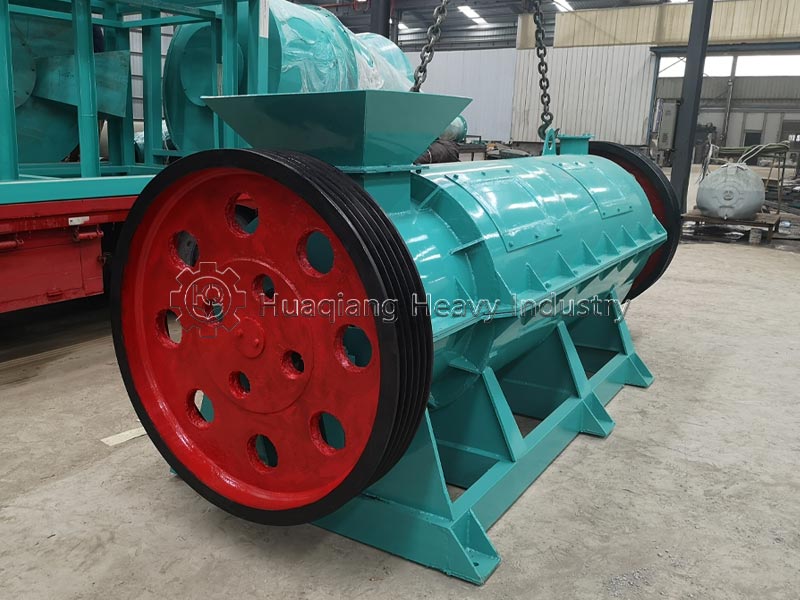
Key equipment transforms chicken manure into valuable resources, powering an efficient production line

Chicken manure, a major waste product in the poultry industry, can cause pollution if left untreated. However, by using specialized chicken manure organic fertilizer machine to build an organic fertilizer production line, it can be efficiently converted into high-quality organic fertilizer, solving environmental problems and creating agricultural value.

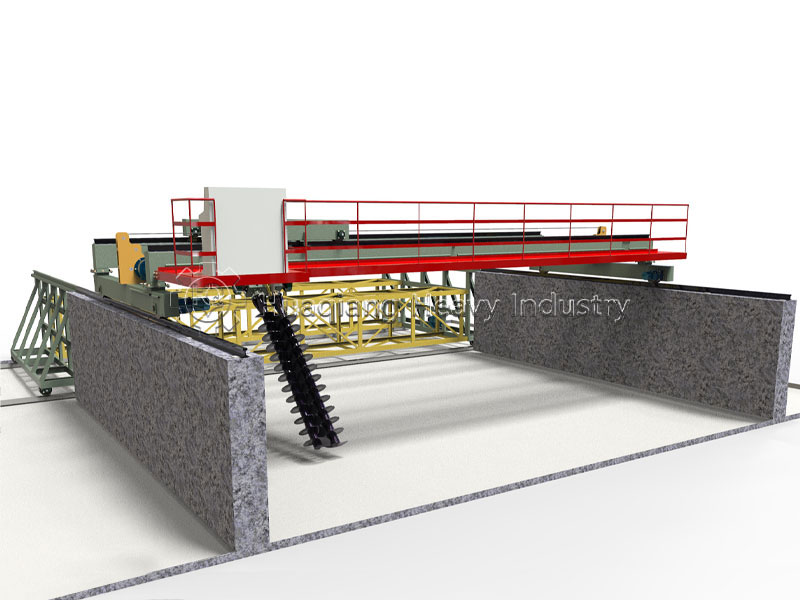
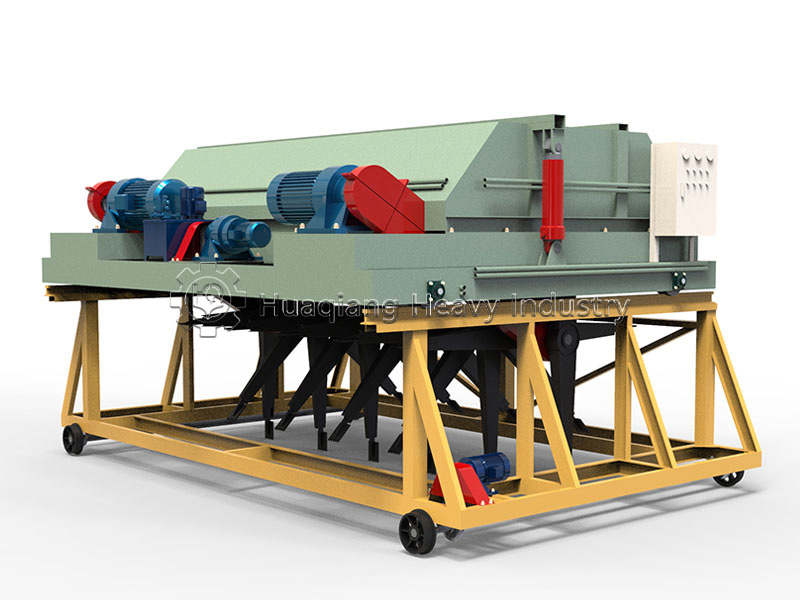
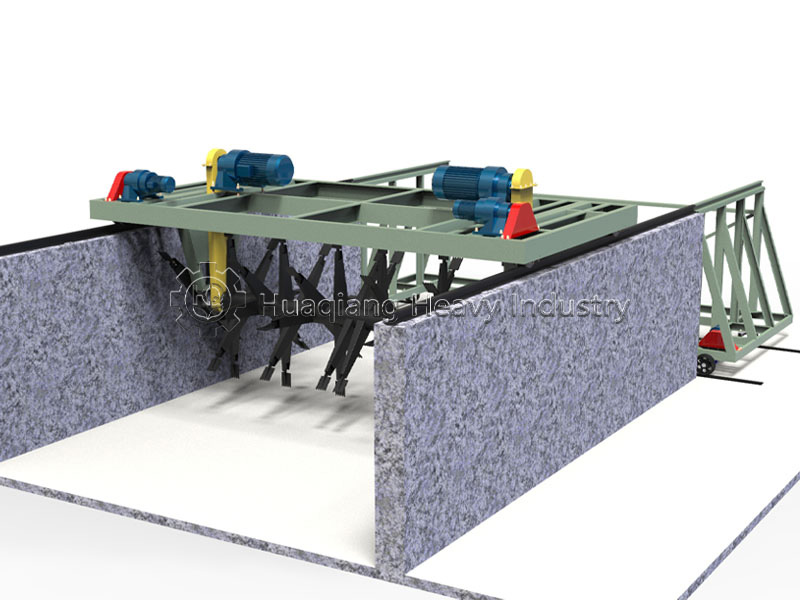
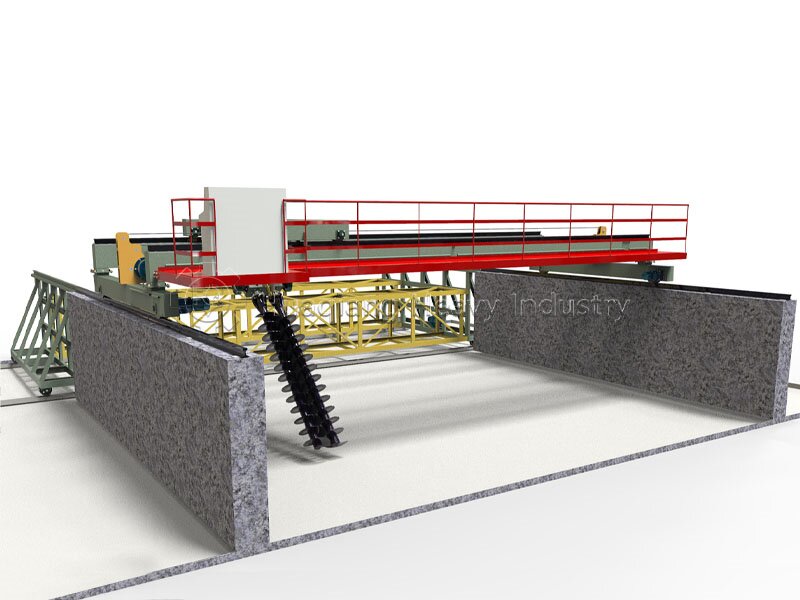
Chicken manure has a high water content and is prone to clumping, making the fermentation process the first hurdle in its resource utilization. The crawler-type compost turner, with its strong adaptability, becomes the core equipment in this process. It can operate directly in the fermentation tank, easily adapting to different sites through its crawler-type movement. It offers deep and wide turning capabilities, thoroughly mixing the chicken manure with auxiliary materials such as straw and fermentation agents, while introducing sufficient oxygen. This keeps the fermentation pile temperature stable at 55-65℃, quickly killing pathogens and insect eggs, and completing the composting process in 20-30 days, significantly improving fermentation efficiency.

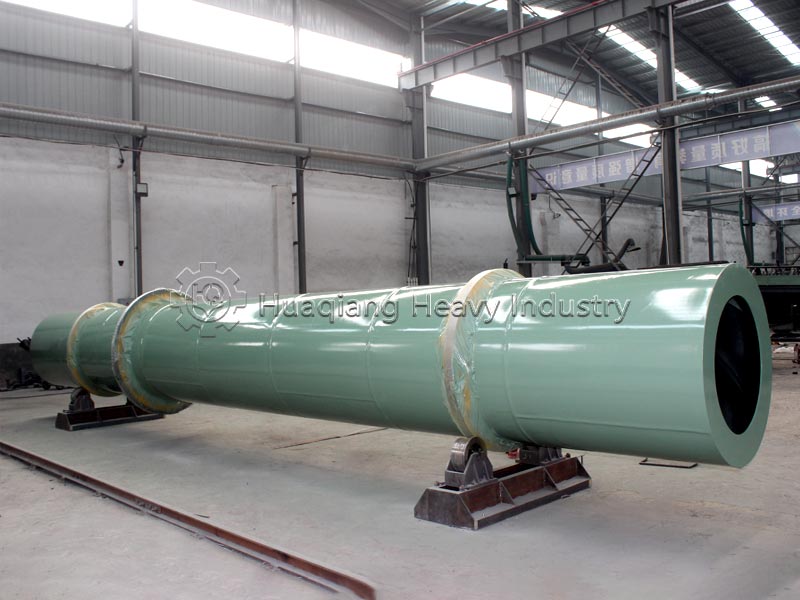
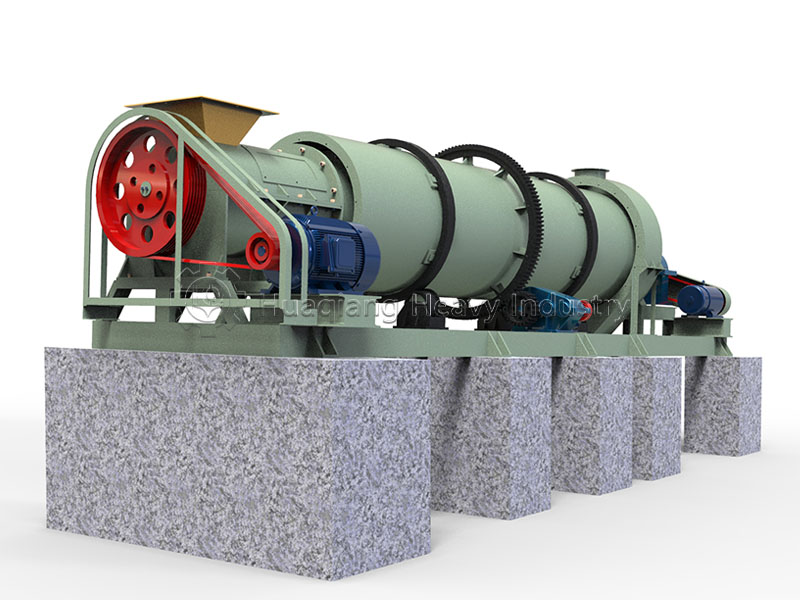
The composted chicken manure material needs to be processed into a finished product to become commercial organic fertilizer, which requires the organic fertilizer granulator. In the production line composed of chicken manure organic fertilizer machine, the treated composted material is rolled into uniform, high-strength spherical granules through the synergistic action of mechanical force and an appropriate amount of binder. After subsequent drying and cooling, qualified chicken manure organic fertilizer is obtained.

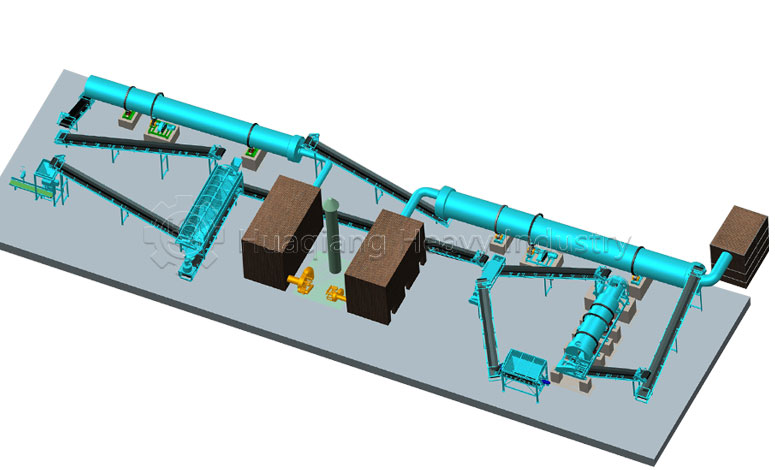
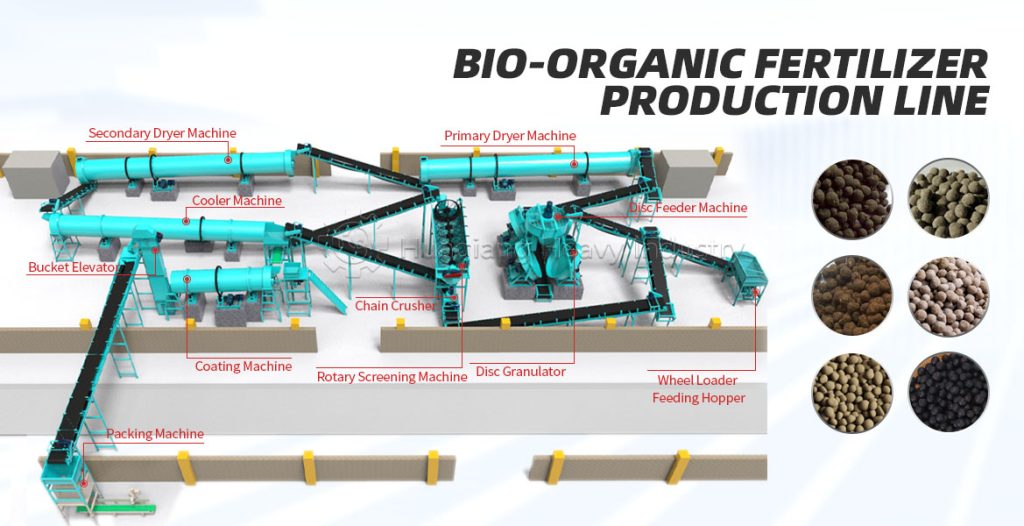
From fermentation to granulation, the organic fertilizer production line, built with the collaborative efforts of windrow compost turners, organic fertilizer granulators, and other chicken manure organic fertilizer machine, achieves full automation of the chicken manure treatment process. This not only reduces labor costs but also increases the resource utilization rate of chicken manure to over 90%. The resulting organic fertilizer is rich in nutrients such as nitrogen, phosphorus, and potassium, improving soil fertility.

How ring die pelleting machines empower the upgrade of organic fertilizer production lines?

Large-scale organic fertilizer production often faces three major challenges: insufficient production capacity to meet market demand, unstable granule quality, and a narrow range of suitable raw materials. The ring die pelleting machine, as a core piece of organic fertilizer production equipment, effectively addresses these problems, becoming a key factor in upgrading organic fertilizer production lines. Its performance advantages are particularly outstanding among fertilizer granulators.

Many organic fertilizer production lines encounter difficulties in raw material processing and low granulation efficiency when scaling up. The emergence of the ring die pelleting machine breaks this deadlock: it can directly process diverse raw materials pre-treated by organic fertilizer production equipment, whether high-fiber straw fermentation materials, high-moisture livestock and poultry manure, or organic-inorganic mixed raw materials. Through the precise interlocking and extrusion of the internal ring die and pressure rollers, it stably forms uniform granules without frequent parameter adjustments, significantly reducing operational difficulty.

Furthermore, the ring die pelleting machine offers superior adaptability within the production line. It seamlessly integrates with automatic batching systems, intelligent temperature-controlled dryers, and grading and screening machines, forming a fully automated operation chain—from raw materials entering the granulation stage to the output of qualified granules, requiring minimal manual intervention. This not only increases hourly production capacity but also avoids quality fluctuations caused by manual operation.

For organic fertilizer companies pursuing standardized production, the ring die pelleting machine is not just a simple fertilizer granulator, but a “core empowering equipment” for the organic fertilizer production line. It solves the efficiency and quality problems in large-scale production and broadens the range of raw materials that can be reused, allowing agricultural waste and industrial organic waste to be efficiently converted into high-quality organic fertilizer.

Flat die pelleting machine: The preferred equipment for small and medium-scale organic fertilizer production lines

In the field of organic fertilizer production, the efficiency and quality of the finished product of an organic fertilizer production line depend critically on the rational configuration of the organic fertilizer production equipment. The fertilizer granulator, as a core piece of equipment, is particularly crucial in this selection process.

As one of the mainstream fertilizer granulators, the flat die pelleting machine plays a core granulation role in organic fertilizer production lines. Pre-treated organic raw materials such as livestock and poultry manure and fermented straw are fed into this equipment after being mixed and adjusted for nutrients by a fertilizer mixer machine. Through the extrusion action of the pressure roller and the flat die, the loose materials are compressed into columnar or flake-shaped granules, without the need for additional large amounts of water or binders, which perfectly suits the characteristics of organic fertilizer raw materials.

The flat die pelleting machine, as a practical organic fertilizer production equipment, has significant advantages. It has a compact structure and a small footprint, making it suitable for small and medium-capacity scenarios with limited space; it has a wide adaptability to raw material moisture content, capable of processing materials with a moisture content of 12%-20%, reducing energy consumption in the pre-treatment stage; it has a high granulation rate, and the finished granules have good strength, meeting the storage and transportation needs of organic fertilizers. In addition, it can be easily connected with supporting equipment such as fertilizer crushers, screener machines, and packaging machines, allowing for the rapid construction of a complete organic fertilizer production line.

Whether processing pure organic fertilizer or producing organic-inorganic compound fertilizer, the flat die pelleting machine can adapt to the needs with its flexible adjustment capabilities. It not only lowers the equipment investment threshold for small and medium-scale organic fertilizer production but also guarantees production efficiency and product quality, becoming an important equipment support for promoting the popularization of the organic fertilizer industry.

Organic fertilizer production line: Efficiently processing organic waste for a better environment

Organic fertilizer production lines use scientific processes to turn various organic waste materials into high-quality organic fertilizer. This not only cuts down on environmental pollution but also improves soil fertility and supports eco-friendly farming.

1.Reducing Waste Pollution

Traditional methods like burning or burying organic waste release harmful gases like methane (CH₄) and hydrogen sulfide (H₂S), which worsen the greenhouse effect. Organic fertilizer production lines use aerobic fermentation technology to convert waste into fertilizer, greatly reducing pollution.

2.Solving Soil Degradation

Long-term use of chemical fertilizers causes soil hardening and loss of organic matter. Organic fertilizer, rich in humic acid and microorganisms, helps soil hold water and nutrients, boosts beneficial microbes, reduces soil-borne diseases, and improves crop resilience.

3.Promoting Circular Agriculture

Organic fertilizer lines create a circular model: Waste→Fertilizer→Farming. This helps farmers cut chemical fertilizer use, lower costs, and improve crop quality—all in line with green food production.

Organic fertilizer production line tackles the challenge of organic waste disposal while driving eco-farming and green cultivation. Whether it’s livestock farms, agricultural farms, food processing plants, or city waste centers—these lines turn waste into a resource.

Ensuring smooth operation of ring die pelleting machines: Repair measures for organic fertilizer plants

The ring die pelleting machine is the core equipment in an organic fertilizer production line. Its smooth operation is key to both production efficiency and product quality. This article details the repair measures organic fertilizer plants use to keep ring die pellet mills running steadily.
1.Troubleshooting and Repairing Common Issues
Poor discharge: Check if the die compression ratio matches the material properties. Clear blocked die holes and replace severely worn ring dies when needed.
Poor pellet formation: Adjust material moisture to 30–40%. Check the roller gap (usually 0.1–0.3 mm) and ensure proper fit between rollers and the die.
Abnormal vibration: Stop the machine immediately. Inspect the main shaft bearings, replace damaged ones, and recalibrate dynamic balance.
2.Preventive Maintenance
Regular lubrication: Check the lubrication system every 8 hours. Use high-temperature lithium-based grease and ensure bearing temperatures stay below 65°C.
Wear-part monitoring: Track roller and die wear. Consider replacing them if output drops by 15% or energy use rises by 20%.
Daily cleaning: Thoroughly clear residue after each shutdown to prevent material caking during startup.

3.Optimizing Operating Parameters
Adjust key settings based on material properties:
Main shaft speed: 60–120 rpm
Working pressure: 6–12 MPa
Material particle size: ≤3 mm
By applying these repair and maintenance steps, organic fertilizer plants can significantly boost ring die pelleting machine stability, extend equipment life, and cut energy use. Regular upkeep reduces unplanned downtime and ensures consistent pellet quality.

One-step mixing and granulation? A revolution in organic fertilizer production line efficiency is here

In traditional organic fertilizer production, mixing and granulation are often two separate processes. The material handling and switching between them not only consumes time and manpower but also increases energy consumption and dust control difficulties. However, a simpler and more efficient production line is becoming the new trend, the core of which lies in a single piece of equipment integrating these two functions—the new type two in one organic fertilizer granulator.

The value of this equipment lies not in its complex principles, but in its extreme simplification of the process. It skips intermediate steps, allowing raw materials to be uniformly mixed and finely granulated within the same working unit. For the production line, this means less space required, smoother process connections, and lower overall operating costs.

Particularly noteworthy is the quality improvement brought about by this new type two in one organic fertilizer granulator. Because the mixed material is immediately fed into the granulation section, its homogeneity and moisture content are instantly set at optimal levels, directly resulting in a higher pelletizing rate and more robust, rounded granules.

It can be said that the emergence of the new type two in one organic fertilizer granulator is not a simple superposition of functions, but a reshaping of the logic of organic fertilizer production, making the organic fertilizer production line more intelligent and more intensive.

Building the core strength for efficient and environmentally friendly fertilizer production

Under the general trend of green agricultural development, the demand for organic fertilizers is growing due to their ability to improve soil quality and enhance crop quality. Efficient organic fertilizer production equipment has become crucial for achieving large-scale and standardized production.

Organic fertilizer production equipment comes in a wide variety of types, covering the entire production process. Among them, the organic fermentation compost turning machine is the core of the initial stage. It can regulate temperature and aeration by turning the fermented materials, accelerating the decomposition of raw materials such as straw and livestock manure, preventing odor generation, and laying a high-quality foundation for subsequent production. In the processing stage, the fertilizer crusher can crush the decomposed materials to a uniform particle size, solving the problem of clumping; subsequently, the fertilizer mixer machine can accurately mix various auxiliary materials to ensure balanced nutrition in the organic fertilizer.

The granulation stage relies on organic fertilizer granulators, such as disc granulators and rotary drum granulators, which can process the mixed materials into granules. This not only facilitates storage and transportation but also controls the nutrient release rate. After granulation, the fertilizer dryer and cooler work together to remove moisture from the granules and stabilize their shape. The fertilizer screener machine then screens out products of the qualified particle size, and unqualified particles can be crushed and reused, reducing waste. Finally, the fertilizer packaging machine achieves automated quantitative packaging, improving production efficiency.

When choosing organic fertilizer production equipment, it is necessary to consider your own production capacity needs and raw material characteristics. For example, small farms can choose compact single-unit equipment, while large production enterprises are suitable for complete organic fertilizer production lines. High-quality equipment can not only increase output but also reduce energy consumption and pollution, meeting environmental protection requirements.

Optimizing double roller press granulator process to boost organic fertilizer production

Double roller press granulators are key equipment in modern organic fertilizer production lines. Optimizing their process directly impacts a company’s output and economic benefits. With the rapid growth of organic farming, how to improve organic fertilizer production through technical upgrades to these granulators has become a major focus for many manufacturers.

1.Optimizing Raw Material Pre-treatment

Grind raw materials to 40-60 mesh. Control moisture content between 20%-25%. Adding suitable binders like bentonite or lignin can significantly improve granulation rate and reduce return material. This is expected to increase output by around 15%.

2.Precise Adjustment of Roller Parameters

For general organic fertilizer production: Set the nip gap between 1.5-2.5mm. Maintain roller pressure at 8-12MPa. Control line speed at 0.8-1.2m/s. Installing pressure sensors and automatic adjustment systems allows for dynamic optimization, improving particle formation rate.

3.Die Selection and Maintenance

Hole Size: 3-6mm suits most organic fertilizers. Open Area Ratio: Maintain between 30%-40%. Regular polishing extends die life. Recommend professional maintenance every 500 tons of material processed to ensure smooth discharge.

4.Coordinated Optimization of Supporting Equipment

Precise batching system (error <1%). Efficient mixer (mixing uniformity >95%). Energy-saving dryer (thermal efficiency >65%). Systematic upgrades like this can increase the entire line’s output by 30%-50%.

Through comprehensive optimization of the double roller press granulator process, organic fertilizer producers can significantly boost production without adding more machines.

Facilitating efficient organic fertilizer production and promoting green agricultural development

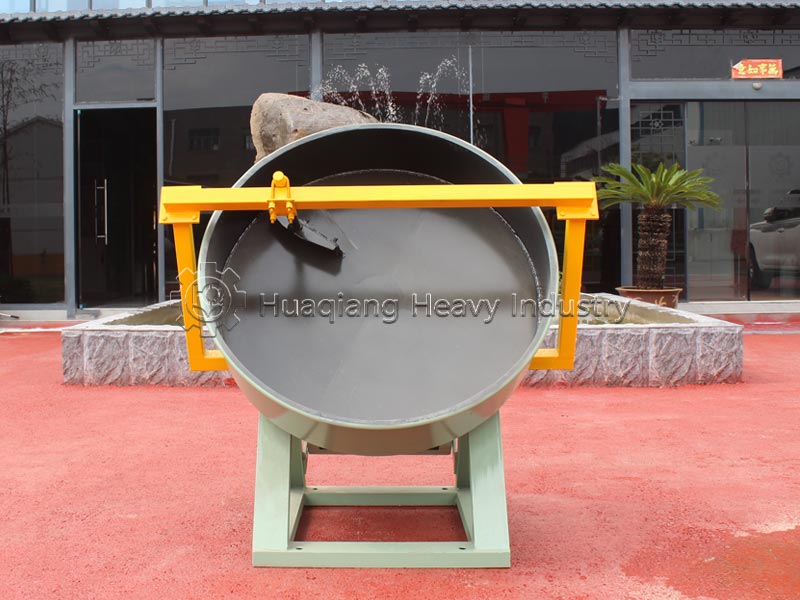
In the field of organic fertilizer production, a highly efficient and reliable granulation equipment is crucial, and the organic fertilizer disc granulator is a highly favored choice. As the core organic fertilizer granulation equipment, it can accurately convert fermented organic raw materials such as livestock and poultry manure and straw into granular organic fertilizer, injecting strong momentum into green agricultural development.

The organic fertilizer disc granulator offers significant advantages. Its granulation rate exceeds 95%, far surpassing ordinary granulation equipment. The main gear is treated with high-frequency quenching, doubling its service life and reducing equipment replacement costs. The equipment adopts an inclined disc design, coupled with adjustable rotation speed and inclination angle, allowing it to adapt to different types of organic raw materials. Whether the material is powdery or slightly viscous, it can be efficiently granulated, fully demonstrating its strong material adaptability.

From a workflow perspective, it is simple and scientific to operate. First, the organic raw materials are pre-processed, crushed to a particle size of 0.1-1mm and thoroughly mixed, and then evenly fed into the disc by the feeding device. At the same time, the water spraying device precisely sprays an appropriate amount of water to maintain the material’s moisture content at 10%-20%. As the disc rotates, the materials tumble and bond under the action of centrifugal force, friction, and gravity, gradually forming granules with a sphericity exceeding 80%. Finally, after screening, unqualified granules are returned for reprocessing, ensuring the quality of the finished product.

This equipment is not only suitable for small and medium-sized organic fertilizer production plants but can also be integrated into large-scale organic fertilizer disc granulation production lines, working in conjunction with supporting equipment such as fertilizer crushers, mixers, and dryers to build a complete organic fertilizer production equipment system. The resulting granular organic fertilizer has uniform nutrients, high strength, is easy to store and transport, and can also improve soil structure and enhance soil fertility.

Vibration screener machine: The core equipment for efficient screening in fertilizer production

In the fertilizer production process, material screening is a critical link that determines product quality. Vibration screener machines, with their high efficiency and precision, have become the equipment of choice for many manufacturers. As a core material screening device, it is not only suitable for the entire fertilizer production process but can also be widely used in mining, building materials, chemical industry, and other fields, providing solutions for material classification in multiple industries.

The core advantages of the vibration screener machine lie in its “efficiency” and “precision.” Its vibrating motor generates high-frequency vibrations, allowing materials to quickly complete projectile motion on the screen surface. Materials smaller than the screen mesh are precisely separated, achieving both classification and impurity removal, significantly improving production efficiency. Considering the specific requirements of fertilizer production, the equipment can be adjusted by changing the screen mesh size and vibration parameters to adapt to different materials, such as granular materials produced by fertilizer granulators and mixed materials after mixing in fertilizer mixers. The screening accuracy far exceeds that of traditional equipment.

At the same time, the sealed design of the equipment is also a significant advantage, effectively reducing dust leakage during fertilizer production, meeting environmental protection requirements and protecting the workshop environment. Its compact structure requires a small footprint and can be flexibly integrated with different production lines, such as NPK fertilizer production lines and organic fertilizer production lines, reducing the difficulty of workshop layout.

For fertilizer companies, choosing a high-quality vibration screener machine can not only improve product qualification rates but also reduce material waste, contributing to efficient production. Whether processing coarse materials after being processed by a fertilizer crusher or conveying qualified finished products to a packaging machine, the vibration screener machine, with its stable performance, is an indispensable key equipment in the fertilizer production chain.