In bio-organic fertilizer production lines, crushing hard materials such as straw clumps and dead branches is a common challenge. This can easily lead to jamming and blade wear in the core bio-organic fertilizer equipment (bio-organic fertilizer crusher), and also affect the operation of the entire production line. Efficiently processing hard materials with this equipment requires key adaptation techniques and risk avoidance strategies, balancing efficiency and equipment protection.
Technique 1: Raw material pre-treatment. First, remove impurities such as metal and stones to avoid damaging the blades; cut large pieces of material to less than 10 centimeters to reduce equipment load. Select blades according to material hardness; use wear-resistant alloy blades for high-hardness materials, and pre-soften coarse fibrous materials to ensure material compatibility with subsequent production line processes.
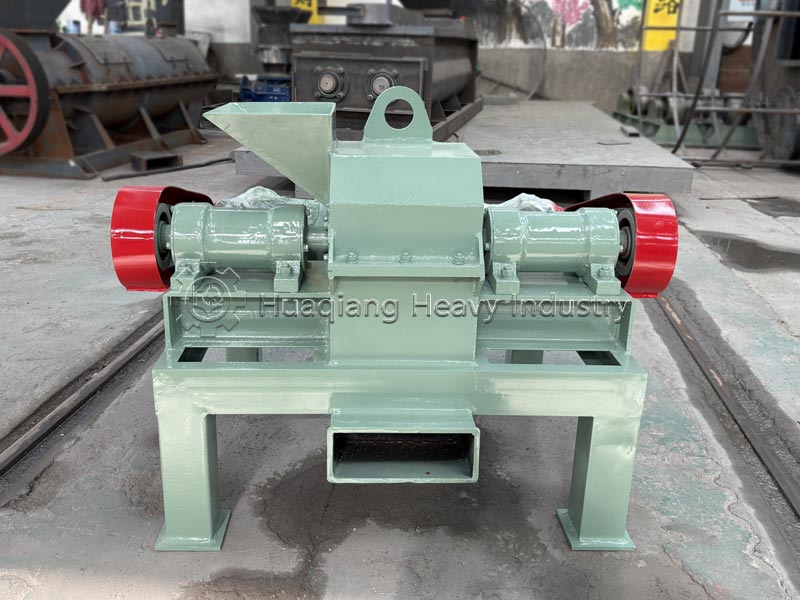
Technique 2: Precise equipment parameter matching. Do not use conventional parameters; slightly reduce the speed for high-hardness materials to maintain torque, and slightly increase the speed for coarse fibrous materials to facilitate secondary crushing; ensure uniform feeding to avoid overload and jamming, and ensure that the crushed material meets the requirements of subsequent processes in the production line.
Troubleshooting Guide: Immediately stop the machine and check for any abnormal noises or vibrations during operation; after operation, clean the remaining material in the chamber, check the blades and screens, and perform timely maintenance and lubrication. Scientific operation will allow the bio-organic fertilizer equipment to stably serve the production line, extend its service life, and ensure efficient and smooth production.